




Who We Are

A specialized fusion supply chain company

We provide engineering services and I&C solutions for MCF devices, combining deep understanding of plasma physics and fusion engineering with extensive experience on public and private fusion devices.
2023
Founded in Luxembourg (HQ), UK office, distributed team across Europe
20+
Plasma physicists, fusion engineers & machine learning specialists
100%
Fusion-focused, all-in on the industry's unlimited potential
5+
Tokamak startups supported across design & engineering
Made in Luxembourg label Fusion Industry Association EFA FuseNet NVIDIA
What We Provide

Three pillars, one full I&C stack

01

Integrated Modeling

Multi-physics simulations across the whole device lifecycle — feasibility, design, engineering, operations — proven from small university devices up to ITER scale and complexity.

02

Plasma Diagnostics

From single sensors to the full Modular Diagnostics Platform — validated measurements feeding plasma control and machine safety on next-generation MCF devices.

03

Plasma Control

Plasma control and operations optimization — classical controllers strengthened with reinforcement learning and other AI/ML techniques, validated on operating devices.

01 · Integrated Modeling — Framework

One framework — the entire device lifecycle

Verified & validated

Checked against experimental data from multiple tokamaks, benchmarked against established codes, and reviewed by external subject-matter experts.

Conventional and RL controllers trained in our framework, tested on DIII-D and other devices — another confirmation of the framework's accuracy.

Availability

Demo and public API free on FusionTwin.io; on-premise and custom integrations on request.

Publications

DINA: R.R. Khayrutdinov & V.E. Lukash, Studies of Plasma Equilibrium and Transport in a Tokamak Fusion Device with the Inverse-Variable Technique, J. Comput. Physics 109, 193 (1993)  ·  NSFsim at DIII-D: R. Clark et al., Validation of NSFsim as a Grad-Shafranov Equilibrium Solver at DIII-D, Fusion Eng. Des. (2025), arXiv:2412.03786

01 · Integrated Modeling — Simulations

Simulations that solve fusion problems

FEASIBILITY

Study a new concept

  • Equilibrium and plasma scenario feasibility
  • Heating & current drive sizing — ECRH/ECCD, NBI
  • Confinement and transport predictions
  • Breakdown & burn-through modeling
  • Key engineering loads estimated early
DESIGN & ENGINEERING

Support your design

  • Magnetic system design and optimization
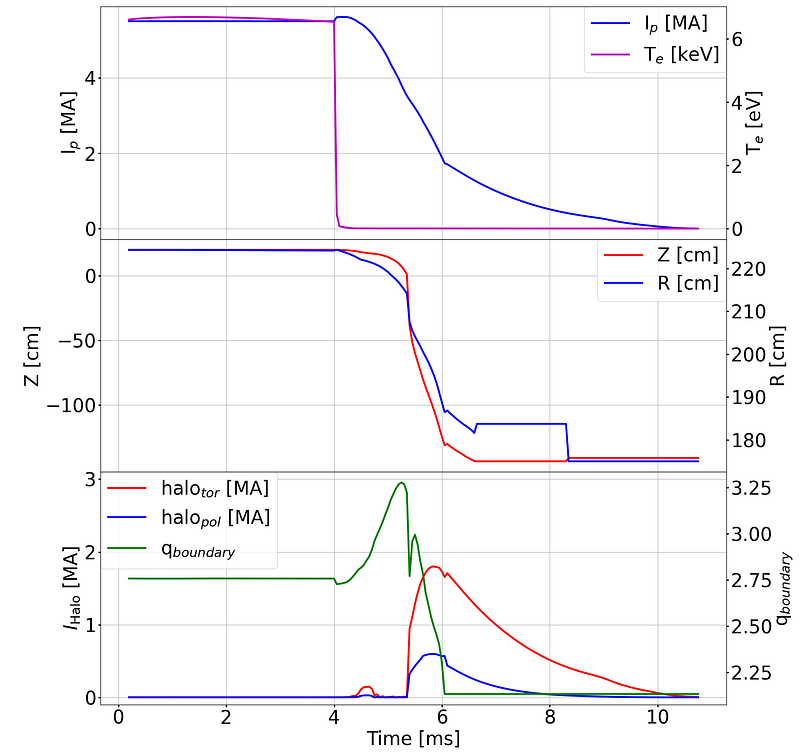
  • Disruption & VDE loads — runaway electrons, halo currents
  • SOL, divertor & plasma-material interaction
  • Synthetic diagnostics for system placement
  • Outputs feeding mechanical, electrical & structural teams
OPERATIONS

Optimize your machine

  • New discharge scenario development
  • Disruption prediction, analysis and mitigation strategy evaluation
  • Turbulent transport, pedestal & MHD stability
  • Software-in-the-loop controller validation
  • ML surrogates for physics acceleration and control
01 · Integrated Modeling — DANTE Case Study

Case study: DANTE Fusion

DANTE Fusion logo
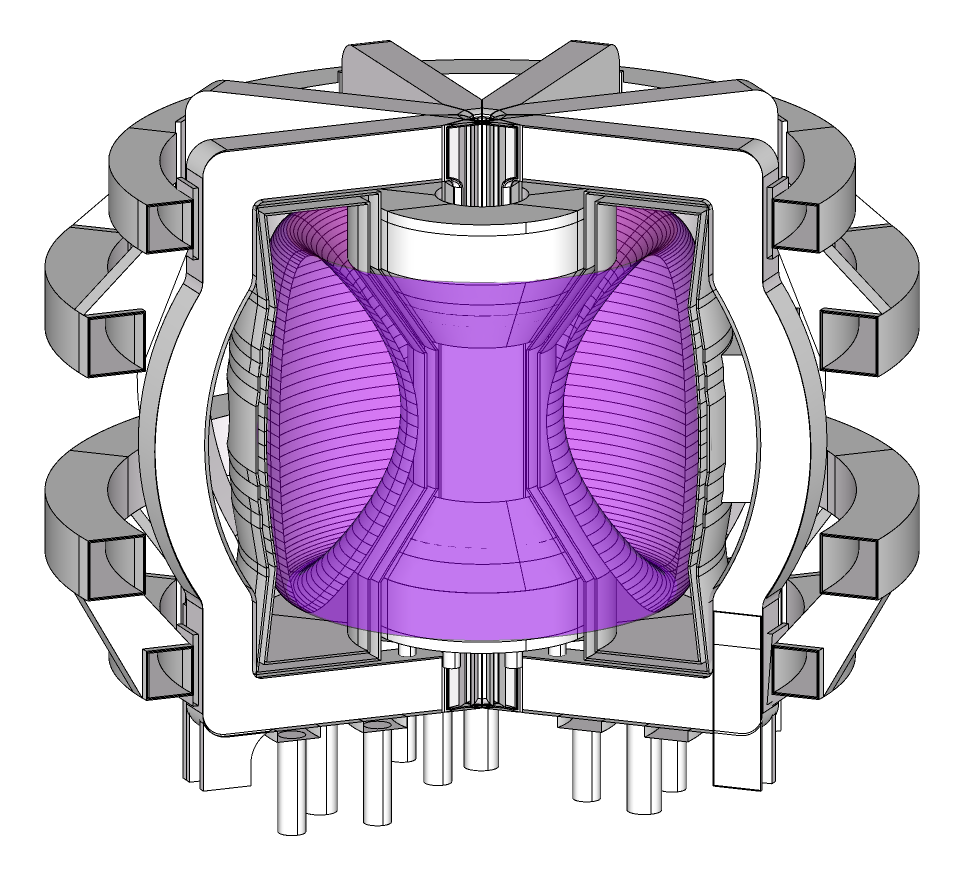
As a core team member, Next Step Fusion leads all design activities on DANTE Fusion's neutron source (tokamak) for medical isotope production.
  • Why it matters: one physics team carries the design from concept to engineering handoff — no gaps between plasma, magnets, and plant systems.
  • Challenge: achieve stable, efficient neutron production within hard limits on materials, geometry, and power supply — at a performance and operating cost that make commercial sense.
  • Delivered so far: target equilibria and plasma scenarios, magnetic system layout and engineering, VDE simulations, auxiliary heating requirements, neutron production and tritium cycle assessments, power supply estimates.
DANTE Fusion neutron source tokamak rendering
01 · Integrated Modeling — DTT Case Study

Case study: disruption simulations for DTT

Time evolution of a simulated disruption at DTT
Publications

Blog series: NSFsim Perspective on Disruptions in TokamaksPart I: Physics Basis  ·  Part II: Simulations for DTT — blog.nextfusion.org (2025)

01 · Integrated Modeling — NTT Case Study

Case study: NTT

Columbia University
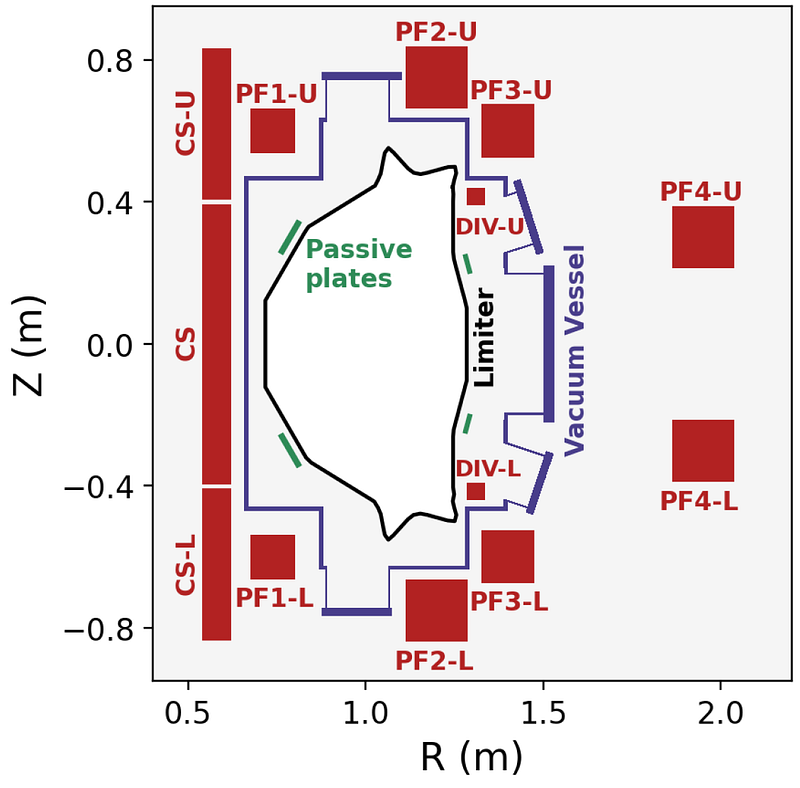
NTT cross-section with key components
Publications

Paper: S. Guizzo et al., Electromagnetic System Conceptual Design for a Negative Triangularity Tokamak, arXiv:2501.14682 (2025)  ·  Blog: NTT: Conceptual Design  ·  NTT: Preliminary Design

01 · Integrated Modeling — Engagement Models

Three ways to work with us

A

Early Engagement

Engage us as early as possible to get proven technologies and processes deployed, the groundwork done, and the road ahead paved — we help build your team, transfer the work, and stay engaged long-term.

B

Team Collaboration

We work alongside your existing team, verifying and validating your tools and results, and supporting the most complex and sophisticated research — extra depth exactly where your team needs it.

C

Licensed Installation

Deploy the NSFsim framework in-house — your infrastructure, your data, your workflows — under flexible licensing, from free research collaborations to full commercial terms with IP transfer and support.


Maritime Fusion Pranos DANTE Fusion NDA Tritium TRUST
02 · Plasma Diagnostics — Approach

Diagnostics built for commercial fusion operation

Supply Chain Complexity

A diagnostic is only as reliable as its supply chain. We actively manage ours — component quality, repeatability, long-term availability, easy maintenance and support.

Real-Time Data for Control & Safety

Measurements alone are not enough — we reconstruct missing plasma parameters in real time using PINNs and fast solvers, delivering a complete, trustworthy plasma state to control and safety.

02 · Plasma Diagnostics — Portfolio

Diagnostics types

CORE

Microwave Diagnostics

ECE, profile reflectometer, CTS, and radial interferometer-polarimeter.

Non-perturbative, no in-vessel calibration targets, reliable in high magnetic field and neutron environments — the core of future FPPs' I&C.

NOVEL

Magnetic Diagnostics

Epitaxial graphene-on-SiC Hall sensors with an intrinsically low neutron-damage cross-section and thermally activated self-healing — built for FPP conditions: D-T neutron fluences of 10²⁰–10²² cm⁻² and temperatures up to 770 K.

ROADMAP

Other Sensors

Further diagnostic types are on the roadmap — and we constantly grow our network of partners and suppliers to cover the demand of next-generation MCF devices and future FPPs.

Let's discuss!

02 · Plasma Diagnostics — MDP

Modular Diagnostics Platform

01 — Sensors and measurements

Our vision for MDP: all measurements required by plasma control and device safety — provided in real-time by a minimalistic, 100% FPP-relevant set of sensors.

02 — Hardware

Modular port-plug assembly consolidating all front-end hardware — radiation-hardened, with neutron & gamma shielding, thermal management, and vacuum boundaries.

03 — VIDA

Versatile Integrated Data Acquisition system: acquisition & control boards, industrial chassis, networks, and software — one platform for native and third-party sensors.

04 — Real-Time Data

Validated, high-integrity real-time data delivered straight to plasma control and device safety systems — hybrid model-based and ML reconstruction with uncertainty quantification throughout.

05 — Supply Chain Ready

Standardized, off-the-shelf, fast-replaceable components backed by a purpose-built, actively managed supply chain — controlled costs, guaranteed availability, and long-term maintenance.

06 — Commissioning & Lifecycle

Factory acceptance testing, on-site commissioning, and calibration, followed by long-term operational support — covering the full device lifetime from first plasma to decommissioning.


02 · Plasma Diagnostics — MDP Case Study

Case study: prototype 2026

DIII-D EPFL UCSD UC Davis Orlov Lab
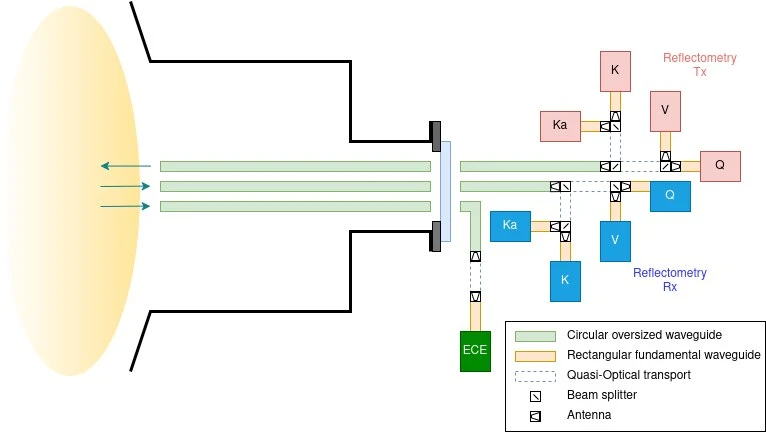
The first MDP iteration delivers Tₑ and nₑ from a single port-plug — an ECE radiometer and profile reflectometer in one compact unit, targeting TCV, DIII-D, and similar MCF devices.
  • Challenge: deliver a minimal viable demonstration of the MDP concept quickly — and in parallel build the team and partnerships, adopt design and engineering tools, establish the supply chain, and lay foundations for VIDA, data processing, and other subsystems.
  • Profiles reconstruction: conditions in future FPPs won't allow measuring full profiles — so alongside direct nₑ and Tₑ measurements, we test reconstruction from partial data, with PINNs restoring complete profiles in real time.
  • Status: components in production, DIII-D physics validation review underway — plasma testing on TCV in late 2026 and DIII-D in early 2027, with validation against existing ECE, reflectometry, and Thomson scattering systems.
MDP prototype transmission-line concept: ECE and reflectometer sharing waveguides
02 · Plasma Diagnostics — THOR Case Study

Case study: THOR magnetic field sensor

Łukasiewicz Institute of Microelectronics and Photonics
THOR is a graphene-on-SiC Hall sensor developed together with IMiF — an FPP-relevant solution that endures what power plants throw at sensors: intense neutron flux and high temperature.
  • Challenge: real-time field and plasma knowledge is the foundation of MCF control — but harsh FPP conditions destroy conventional magnetic sensors, and distance from the plasma degrades measurements.
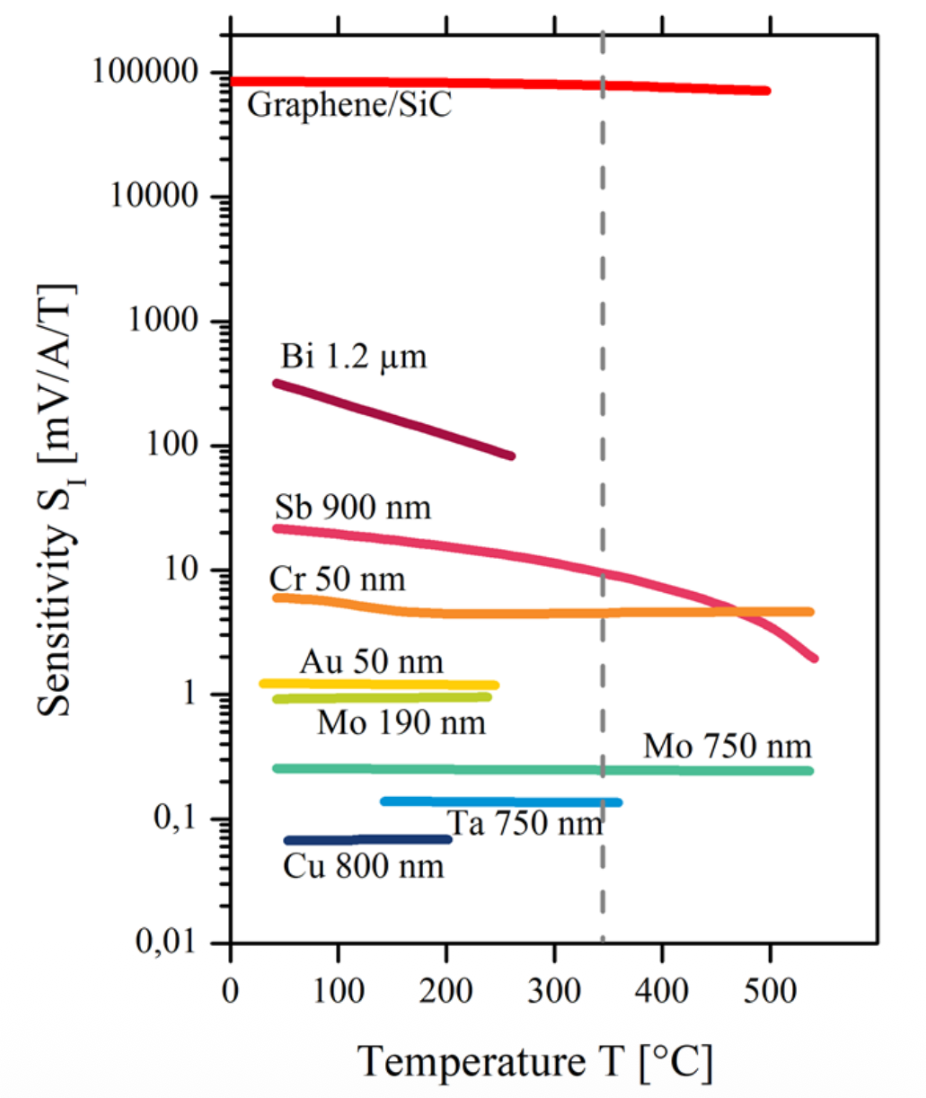
  • Technology: a single atomic layer of epitaxial graphene on radiation-hard SiC (Al₂O₃/QFS-graphene/6H-SiC(0001)) — ~75 V/AT sensitivity (75–80× today's fusion-grade Hall sensors), stable up to 770 K, self-healing of neutron damage through a simple thermal anneal, compact footprint.
  • Status: validated in a relevant laboratory environment (TRL 4); the partnership is now maturing THOR to demonstration on relevant MCF devices (TRL 6), followed by commercialization.
THOR sensitivity vs. metal thin-film Hall sensors
Publications

Self-healing: S. El-Ahmar et al., Appl. Surf. Sci. 685, 161953 (2025)  ·  Thermal stability: T. Ciuk et al., IEEE EDL 45, 1957 (2024)

02 · Plasma Diagnostics — Engagement Model

Co-design early: free feasibility study

In commercial devices every port and every liter of blanket volume counts. Co-designing device, control, and diagnostics from the start minimizes the diagnostics footprint — and makes large plasmas reliably controllable in long-pulse or steady-state.
1
Measurements Clarification
What must be measured on your device — and why
2
Feasibility
Study
Microwave diagnostics applicability to your device & parameters
3
Diagnostics Solution Design
Diagnostics set, port & access needs — fed back into device design
4
Manufacturing & Procurement
Standardized components, managed supply chain
5
Deployment & Commissioning
FAT, on-site commissioning, calibration
6
Operation & Support
Long-term support across the device lifetime
03 · Plasma Control — Solutions

Real-time control for an unstable, high-dimensional system

ALGORITHMS

Controller Development

We develop controllers combining conventional approaches with machine learning and reinforcement learning to achieve superior robustness and keep control transparent.

OPERATIONS

Scenario Development

Full discharge scenarios — initiation, ramp-up, flat-top, and ramp-down — optimized across energy, stability, and operational goals, with actuator limits and stability boundaries respected by design.

INTEGRATION

Plasma Control System

We aim to provide a plasma control system for MCF devices and future FPPs that combines all of our expertise — integrated modeling, diagnostics, scenario development, and control.
03 · Plasma Control — Shape Case Study

Case study: shape control with RL

DIII-D UCSD Orlov Lab
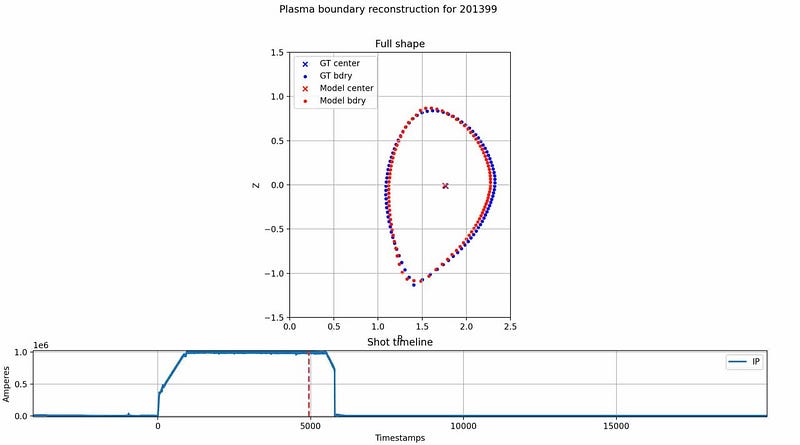
Plasma boundary reconstruction on an RL-controlled DIII-D pulse
Publications

RL control at DIII-D: G.F. Subbotin et al., Demonstration of reconstruction-free static magnetic control of DIII-D plasma with deep reinforcement learning, Nucl. Fusion (2026)  ·  Sensor-robust shape control: D. Sorokin et al., Dynamic Plasma Shape Control with Arbitrary Sensor Subsets, arXiv:2605.15935 (2026)
03 · Plasma Control — Heating Case Study

Case study: Tₑ control with RL

DIII-D UCSD Orlov Lab
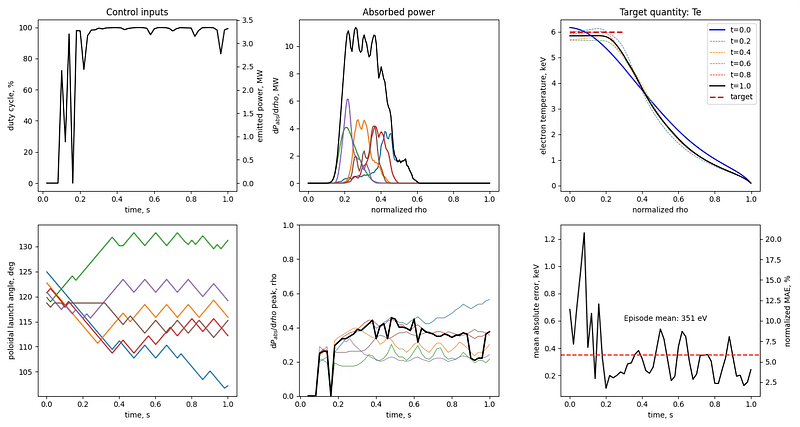
RL electron temperature control episode on the DIII-D digital twin
Publications

Blog: Controlling Plasma Temperature and Safety Factor with Gyrotrons Using Reinforcement Learning — blog.nextfusion.org (2026)

Team & Track Record

Built by people who have done it before

Aleksei Zolotarev

Aleksei Zolotarev

CEO & Founder

Entrepreneur and investor, dedicated to fusion.

Georgy Subbotin

Georgy Subbotin

CTO

Senior plasma physicist; Kurchatov, ITER.
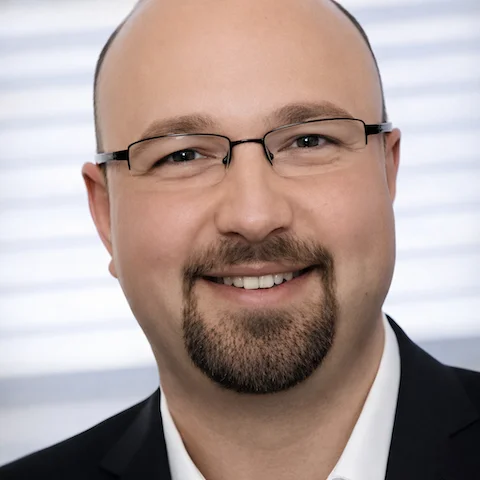
Michele Romanelli

Michele Romanelli

UK Director

Integrated modeling expert; JET, EUROfusion, TE.

Alexei Zhurba

Alexei Zhurba

CPO

Physics, software, product background.
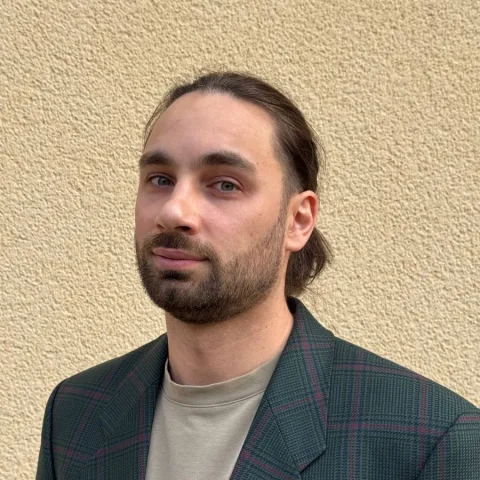
Mikhail Drabinskiy

Mikhail Drabinskiy

Senior Researcher

Plasma physicist; tokamaks, stellarators.
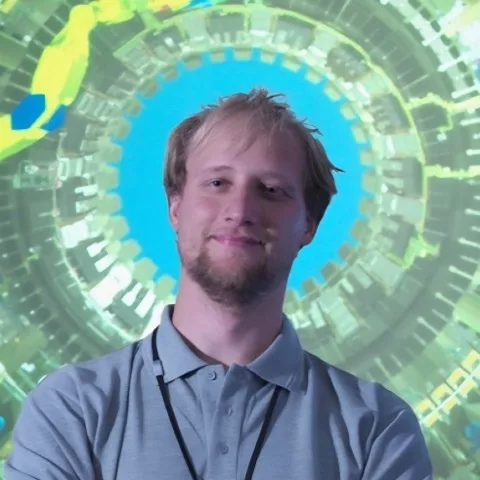
Antoine Sirinelli

Antoine Sirinelli

Head of Diagnostics

Microwave, laser sensors; JET, WEST, ITER.

100s
Of specialized simulations delivered to solve a wide range of problems
10+
Feasibility studies of new fusion devices of various size, research and commercial purpose
5+
Tokamak startups supported across design & engineering
10+
Devices hands-on: ITER, WEST, JET, DIII-D, ST40, MAST, TJ-II, and others